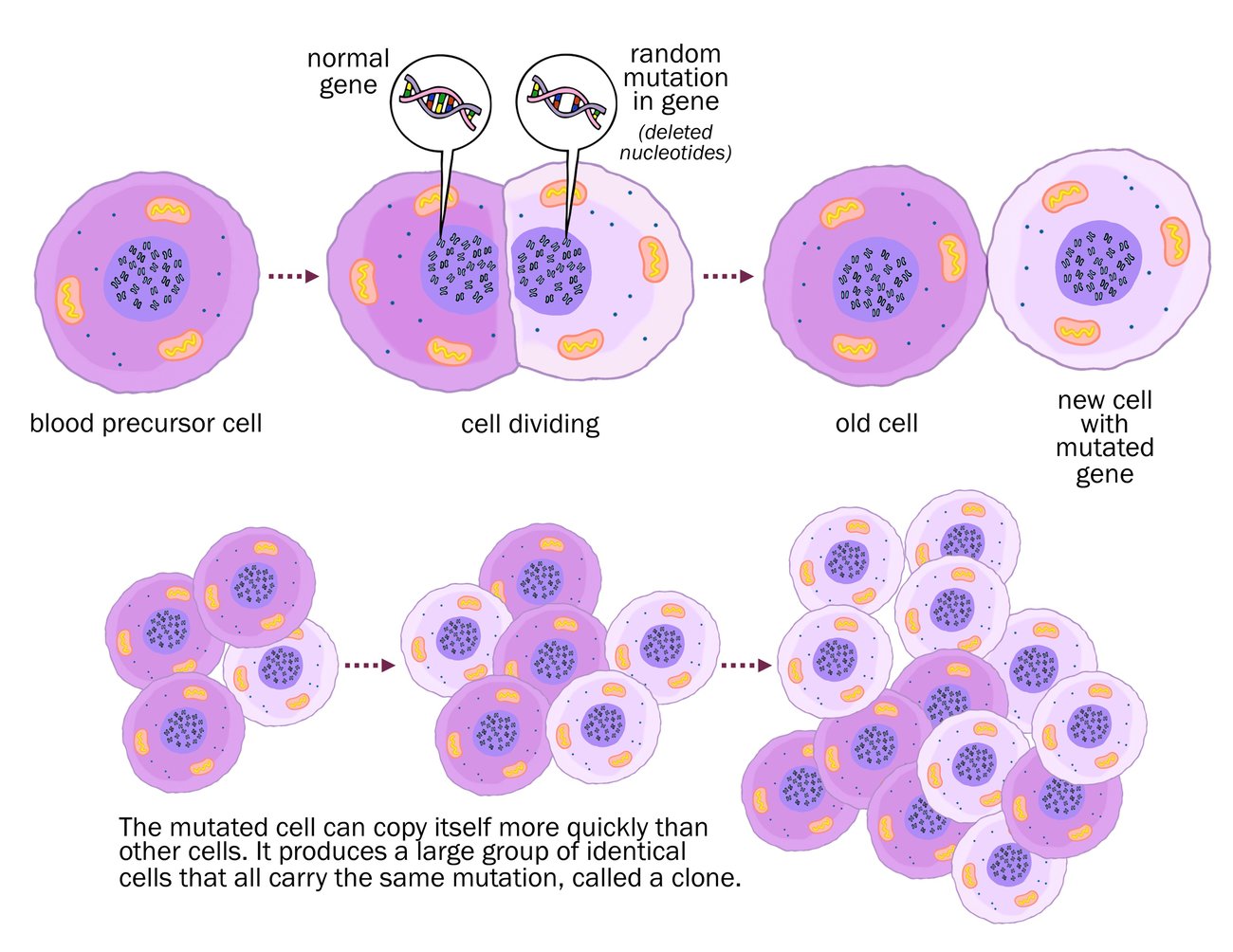
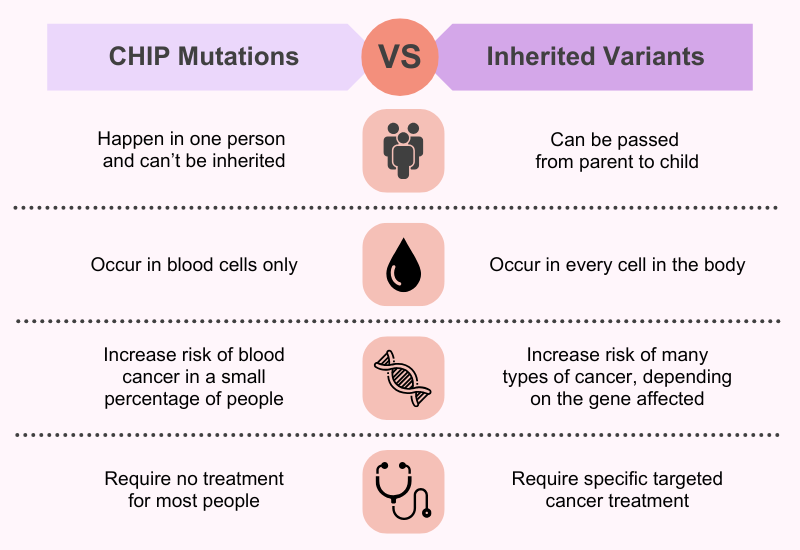
CHIP mutations tend to happen in certain genes. One of those genes is TP53, which is known for its role in inherited cancer syndromes. CHIP can also occur in CHEK2, another gene associated with hereditary cancer. It is extremely unusual for CHIP to cause mutations in BRCA1, BRCA2, PALB2, ATM, Lynch syndrome genes or genes associated with raised risk for heart disease.
A person who tests positive for a variant in TP53 might assume they inherited their mutation. But if they don’t have a strong family history of cancer, their result may actually be CHIP. The distinction matters. A CHIP mutation has a different set of risks than an inherited mutation—and requires a different treatment plan.
What Should You Ask Your Doctor?
If your blood test reveals a mutation, a good first question to ask your doctor is, “Do you think this mutation is only in my blood, or is it in all the cells of my body?” This helps your doctor plan through the next steps. For some gene variants, a lab test may even have a footnote stating that CHIP is a possible explanation. When there is uncertainty, specialists such as hematologists (blood specialists) and oncologists can do additional testing.
How Can Doctors Tell the Difference?
Clues in test results help doctors figure out if a mutation is CHIP.
One clue is the percentage of your blood cells that carry the mutation. If only a small percentage of the genes are mutated, that usually means it’s CHIP.
Another clue is the body part where the mutation is found. CHIP only occurs in the blood. Tests in other tissues—like skin, hair or toenails—can show if the mutation is elsewhere. If the mutation is found in your skin, it’s more likely an inherited variant.
If it is CHIP, what next?
For about 90% of people, CHIP does not lead to serious health issues. But a small group of people with CHIP have higher disease risk and need closer monitoring. A specialist may give a test to determine whether you are in that small percentage. One of these tests is called the Clonal Hematopoiesis Risk Score (CHRS). With this tool, the doctor considers how much of your blood is affected, whether blood counts of the mutation are increasing and whether you have more than one mutation. These factors help predict whether your CHIP is likely to stay harmless or not.
If you are in the high-risk minority, the main health concern is blood cancer. Individuals with the most high-risk CHIP have significantly increased odds of developing blood cancers—up to 200 times higher than average. There is also a link between CHIP and diseases driven by inflammation, such as heart disease, kidney disease and certain lung diseases. That’s because the mutated blood cells can contribute to inflammation in the body.
Talk to a hematologist to find out what your risks are. If you have a low-risk CHIP mutation, you don’t need to take action. If you have high-risk CHIP, your doctor can make a plan that fits your individual needs.
|