|
My dad’s family always attributed their numerous cancer diagnoses to the pesticides on the farm where he and his 10 siblings grew up. Ultimately, it took a diagnosis of pancreatic cancer in my father and an urgent need to understand his condition to uncover the true, genetic culprit that had been silently claiming lives for decades.
The sheer numbers of cancers across my aunts and uncles had always given me some lingering suspicion, so after the birth of my first child in 2015, I got a consumer DNA test. I was not particularly well informed about what was included or not included in those tests, so when a company that analyzes consumer test results for possible genetic risk factors found nothing particularly concerning, I also put genetics out of my mind. We lost another of my uncles to pancreatic cancer in 2020, and still we didn't think much of it.
It was only in 2023 when my dad was diagnosed with pancreatic cancer that the role of genetics came to light. I had done a lot of reading about potential treatments, and I found that if he had certain pathogenic variants, his treatment options might be different and his outlook possibly better. I was extremely frustrated with the pace of his testing, and so I decided to get tested myself. I was really hoping to just provide faster insights to his care team.
My results came back indicating a whole gene deletion in CDKN2A. It was, unfortunately, the worst possible scenario: a pathogenic variant that opened up zero treatment options. Yet a significant silver lining emerged: my dad’s last surviving sibling, my uncle, was tested and found to have the same variant. He received screening and was also found to have pancreatic cancer. Where my dad could only receive palliative care and passed in 2024, my uncle was able to undergo the Whipple procedure and survives on.
In the end, five of the 11 children in my dad’s family ended up diagnosed with pancreatic cancer. It feels so blindingly obvious in retrospect, with that ratio almost perfectly explained by this variant. I wish we had looked sooner.
Still, even after we shared the information with our family, I was consistently surprised at how few of them opted to act on even being tested. To me, the benefit of testing has always been obvious. I had the variant the day before I knew and the day after I knew, and so it is nothing but a benefit that I can now act with agency to do everything in my power to ensure that I catch any possible cancers early, when I will have the best chance to beat them. Knowing that my children also have a 50% chance of inheriting this variant, I am empowered to protect their future health as well, should they choose to be tested when they are older.
While I know there are others out there with CDKN2A variants, my family feels unique. I have never seen exactly the same variant, and we also have never had a family history of health issues like melanoma that seem to appear in others who have alternative CDKN2A variants. For a long time, I didn’t find any research or posts from others with my specific variant. It was an isolating experience, and I began to resign myself to that reality.
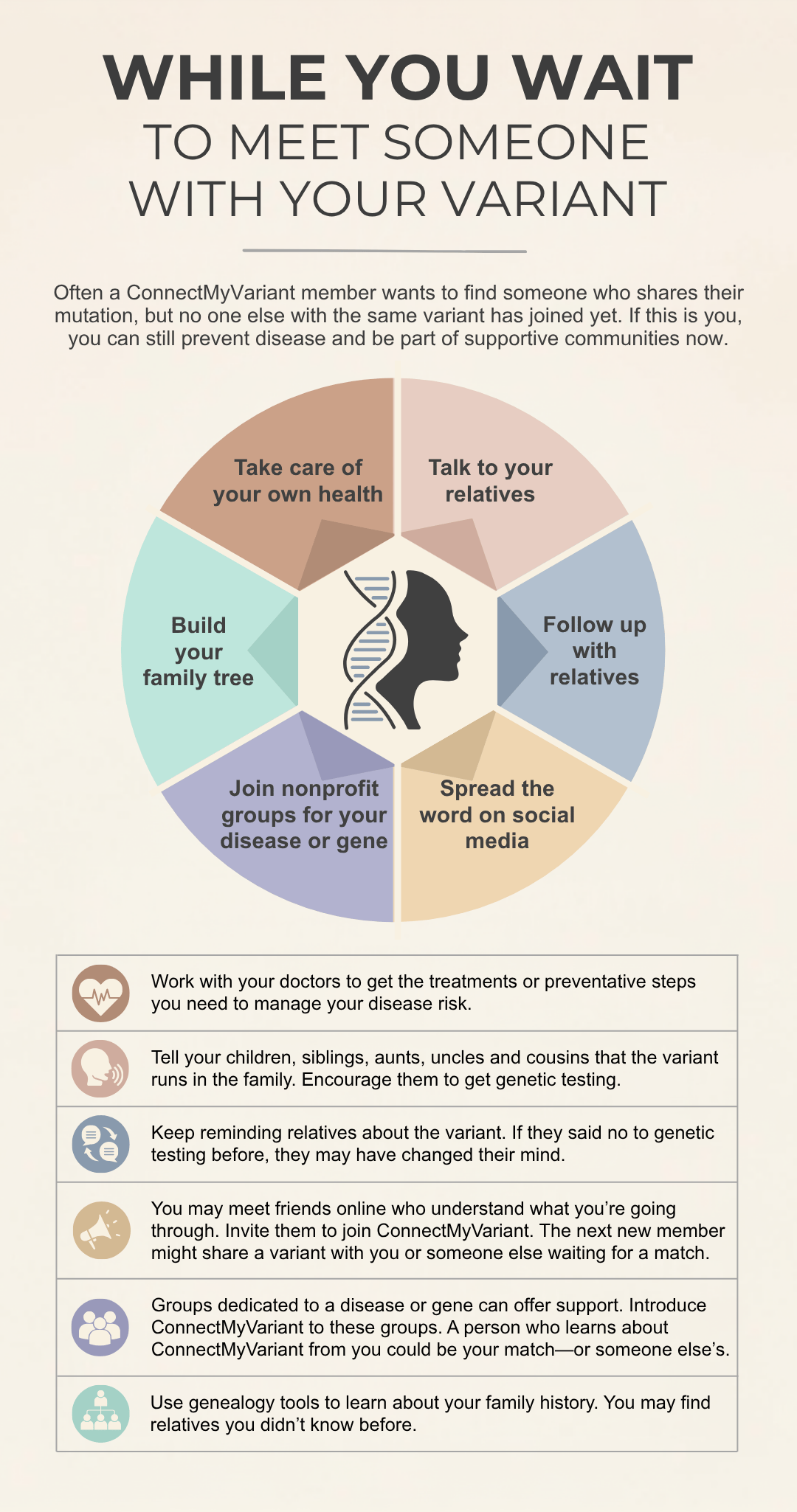
That changed when I connected with someone on an online forum. While our variants weren’t identical, we shared screening protocols and stories, and she introduced me to ConnectMyVariant. This community has replaced that isolation with a genuine sense of hope, and in the meantime, while I await meeting someone with the same variant, ConnectMyVariant has put me in touch with some great resources to navigate my family history. We continue to encourage our extended family to get screened and take a proactive role in their own health journeys.
|